Showing posts with label Gita / Karmayoga. Show all posts

Saturday, 12 April 2014

When you have the right attitude, the associated Karma will not stick to you.


Every action has it consequences. The consequences of one’s actions are called “Karma”. Typically, good karma is Punyam and leads to benefits; bad karma is papam and it leads to hardship. When unpredictable bad things happen, Hindus attribute it to their bad karma, either from this life or from a previous life. Pious Hindus like to earn Punyam by doing good deeds and wash off their Papam through charity, penance, rituals and prayer. Sometimes it is hard to decide what is a good deed and what is a bad deed. The thought of Karma can paralyze pious people into inaction or remove their motivation to work. Krishna taught that if you do your duty, established in Yoga, not motivated by results, then Karma will not stick to you.

The part of the Vedas, called the Karmakanda (section on Karma), teach how to conduct your life and worship, in such a way that you have health, wealth, prosperity and all manner of material comforts on earth and then go onto a blissful life in heaven. Only the Vedanta and Upanishads discuss philosophy. The Vedas deal with the manifest universe. The manifest universe can be described by the three Gunas (qualities).

The Sankhyas turn away from material pleasures and from the Karmakanda of the Vedas. They believe that intellect and knowledge are higher than karma. Krishna said that Karma is far inferior to BuddhiYoga. (Union with God through the intellect).

The Gita says that one should be above the three Gunas and free from dualities like good and bad, pleasant and unpleasant. People whose intellect is carried away by matters related to experiencing luxury - Bhoga, and wealth do not attain Samadhi. Samadhi is a state of togetherness with the beginning, the First, ie with God. The wise give up the fruits of their actions and become free of the bondages of life. They reach the state of ‘Anamayam’ (Non-illusory? Free from evil?)

When you are free from illusion then you will know the difference between what you hear and what you ought to hear. When your agitated mind is still and in Samadhi, you will get rid of Karma and attain Yoga.

Friday, 27 December 2013

कर्म का क्षेत्र तथा उनकी अंतःक्रियाएँ


महाभूतान्यहंकरो बुद्धिरव्यक्तमेव च। 
इन्द्रियाणि दशैकं च पञ्च चेन्द्रियगोचराः।।
इच्छा द्वेषः सुखं दुःखं सङ्घातश्चेतना धृति। 
एतत्क्षेत्रं समासेन सविकारमुदाहृतम्।।

पंच महाभूत , अहंकार , बुद्धि , अव्यक्त (तीनों गुणों की अप्रकट अवस्था ) , दसों इन्द्रियाँ तथा मन , पाँच इन्द्रियविषय , इच्छा , द्वेष , सुख , दुख , संघात , जीवन के लक्षण तथा धैर्य - इन सब को संक्षेप में कर्म का क्षेत्र तथा उनकी अंतःक्रियाएँ   (विकार) कहा जाता है। 

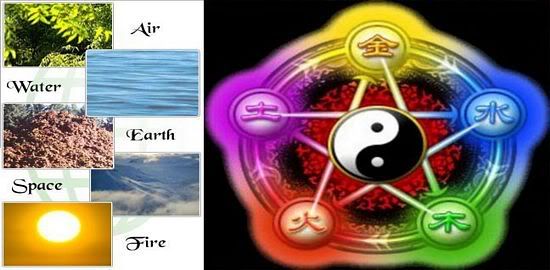
The five major elements (earth, water, fire, air, and ether), the personality component of ego, the element of intellect, the primordial element of material nature, the five perceptual senses (eye, tongue, tactile sense, nose, and ear), the five senses of action (voice, hands, legs, anus, and genital), the internal sense (mind), the five acceptable objects of the senses (form, taste, touch, smell, and sound), desire, hatred, happiness, unhappiness, the body, the perceptual faculty of the mind, patience, and the six material transformations of birth, sustenance, growth, maturity, decline, and destruction summarily, all these are known as k,etra, the sphere of action.

Thursday, 28 November 2013

पाँच कर्म के कारण


अधिष्ठानं तथा कर्ता करणं च पृथग्धिम्। 
विविधाश्च पृथक्चेष्ठा दैवं चैवात्र पञ्चमम्।।

कर्म का स्थान (शरीर ), कर्ता , विभिन्न इन्द्रियाँ , अनेक प्रकार की चेष्टाएँ तथा परमात्मा - ये पाँच कर्म के कारण हैं। 

(With the help of these five factors, all actions are effected:) 
The body, ego (in the form of the knot of spirit and matter), the separate senses, the different endeavors, and destiny, or the intervention of the Supreme Universal Controller. 

Friday, 22 November 2013

कर्मयोग रहस्य ...भाग ४


तस्मादसक्तः सततं कार्यं कर्म समाचर। 
असक्तो ह्याचरन्कर्म परमाप्नोति पूरुषः।।


अतः कर्मफल में आसक्त हुए बिना मनुष्य को अपना कर्तव्य समझ कर निरन्तर कर्म करते रहना चाहिए क्योंकि अनासक्त होकर कर्म करने से उसे परब्रह्म की प्राप्ति होती है। 

Therefore without attachment, without interruption, perfectly perform prescribed actions; since by performing prescribed actions a person achieves the highest good. 

Monday, 11 November 2013

Work does not bind a person


योगसंन्यस्तकर्माणं ज्ञानसंछिन्नसंशयम्। 
आत्मवन्तं न कर्माणि निबध्नन्ति धनञ्जय।।४. ४१।।


जो व्यक्ति अपने कर्मफलों का परित्याग करते हुए भक्ति करता है और जिसके संशय दिव्यज्ञान द्वारा विनिष्ट हो चुके होते हैं वही वास्तव में आत्मपरायण है।  हे धनञ्जय ! वह कर्मों के बंधन से नहीं बँधता। 

Work (Karm) does not bind a person who has renounced work --- by renouncing the fruits of work --- through KarmaYog, and whose doubts about the Self are completely destroyed by Vivek, the application of Self-knowledge, O Arjun. 


Wednesday, 6 November 2013

कर्मयोग रहस्य ३

यदृच्छालाभसंतुष्टो द्वन्द्वातीतो विमत्सरः। 
समः सिद्धावसिध्दौं च कृत्वापि न निबध्यते।।

जो स्वतः होने वाले लाभ से संतुष्ट रहता है , जो द्वंद्व से मुक्त है और ईर्ष्या नहीं करता , जो सफलता तथा असफलता दोनों में स्थिर रहता है , वह कर्म करता हुआ भी कभी बँधता नहीं। 


Friday, 25 October 2013

gita : कर्मयोगरहस्य

Every action has it consequences. The consequences of one’s actions are called “Karma”. Typically, good karmacis Punyam and leads to benefits; bad karma is papam and it leads to hardship. When unpredictable bad things happen, Hindus attribute it to their bad karma, either from this life or from a previous life. Pious Hindus like to earn Punyam by doing good deeds and wash off their Papam through charity, penance, rituals and prayer. Sometimes it is hard to decide what is a good deed and what is a bad deed. The thought of Karma can paralyze pious people into inaction or remove their motivation to work. Krishna taught that if you do your duty, established in Yoga, not motivated by results, then Karma will not stick to you.
                   The part of the Vedas, called the Karmakanda (section on Karma), teach how to conduct your life and worship, in such a way that you have health, wealth, prosperity and all manner of material comforts on earth and then go onto a blissful life in heaven. Only the Vedanta and Upanishads discuss philosophy. The Vedas deal with the manifest universe. The manifest universe can be described by the three Gunas (qualities). The Sankhyas turn away from material pleasures and from the Karmakanda of the Vedas. They believe that intellect and knowledge are higher than karma. Krishna said that Karma is far inferior to BuddhiYoga. (Union with God through the intellect).
                  The Gita says that one should be above the three Gunas and free from dualities like good and bad, pleasant and unpleasant. People whose intellect is carried away by matters related to experiencing luxury - Bhoga, and wealth do not attain Samadhi. Samadhi is a state of togetherness with the beginning, the First, ie with God. The wise give up the fruits of their actions and become free of the bondages of life. They reach the state of ‘Anamayam’ (Non-illusory? Free from evil?) When you are free from illusion then you will know the difference between what you hear and what you ought to hear. When your agitated mind is still and in Samadhi, you will get rid of Karma and attain Yoga.
Wednesday, 23 October 2013

कर्म अपने में "आनंद" है


जो कर्म मनुष्य की ऊर्जा से प्रकट होता है वह शुभ ही होगा।  आवश्यक नही है कि  वासना न हो तो कर्म नही होगा।  हमारे जीवन का अनुभव भी यही है कि  जो कर्म हमसे सहज फूटता है वह हमें आनंद तो देता ही है , परिवेश भी उस कर्म की सुगंध से सुवासित होता है। वासना छूटी कि  अशुभ कर्म स्वत: ही छूट जाता है,  वृक्ष बनना ,नदी का बहना , चिड़ियों का चहचहाना , सूरज का उदय होना आदि।  केशव कहते है की कर्म अपने में "आनंद" है अपने में फल है।  पलायनवाद, नकारात्मकता, घर छोड़ कर जंगल भागना ये सब अकर्मण्यता के उदाहरण हैं।  

Saturday, 19 October 2013

Karmayoga explained - 4


yajnayacharatah karma samagram praviliyate (4.23)
The person who is totally detached (gatasanga), and free from attachments (mukta), and established in the wisdom of life – (jnanavasthita-ceta), and who performs action as a sacrifice
as detailed in the Third Chapter, for him every action melts, as ice before the sun.

No action will produce a reaction in the case of a person who acts as if in a yajna or a sacrifice – i.e., as a participation in the cosmic purposes and not as an individual actor for the purpose of reaping an ulterior fruit. Expecting a fruit is a special characteristic of selfish action, and there is no expectation of fruit in an unselfish action. It is work for work’s sake, duty for duty’s sake, as they say. The moment there is an intention in the mind to reap a consequence or a fruit tomorrow or the day after or in the future, as the result of karma or action done today, that person is actually thinking in terms of the time process, because the fruit of an action will accrue only after some time. The expectation of the fruit of an action, therefore, is tantamount to involvement in the process of time, and time is equal to death; and such a person is bound by karma. But one who performs actions as a yajna, as a duty, does not expect any fruit. Ulterior motive is totally absent in the case of unselfish action.

Saturday, 12 October 2013

कर्मयोग रहस्य - २

न कर्तृत्वं न कर्माणि लोकस्य सृजति प्रभुः |
न कर्मफलसंयोगं स्वभावस्तु प्रवर्तते ||५- १४||

शरीररूपी नगर का स्वामी जीवात्मा न तो कर्म का सृजन करता है,न लोगों को कर्म करने के लिए प्रेरित करता है ,न ही कर्मफल की रचना करता है। वह तो प्रकृति के गुणों द्वारा ही किया जाता है।

यद्यपि सृष्टि  का निर्माण करने वाला ईश्वर एक ही है ,फिर भी इस जगत में अनेकानेक विविधताएँ हैं। कोई सुखी है , कोई दुखी है। कोई सुन्दर है तो कोई कुरूप है।कोई विद्वान् है तो कोई मूर्ख। आखिर मनुष्यों में यह भेद क्यों?क्यों हम सभी एक ही परमात्मा की संतान होते हुए भी भिन्न-भिन्न रूपों में निर्मित किए गए हैं?जगत की इन अनेकानेक भिन्नताओं का कारण  यह है कि  ईश्वर  ने मनुष्य के कर्मों का निर्माण नहीं किया है। कर्म जीवों ने स्वयं द्वारा किए हैं ,उन कर्मों के फल के रूप में कभी वह श्रेष्ठ योनि में जन्म लेता है , कभी निम्न योनि में। इस प्रकार जन्म मृत्यु, सुख-दु:ख ज़रा- व्याधि आदि मनुष्य को उसके कर्मो के फल के स्वरुप में ही प्राप्त होते हैं।अच्छा जीवन जीने वाला व्यक्ति किसी अन्य पर उपकार नहीं करता , अपितु वह स्वयं को उपकृत करता है।

Friday, 27 September 2013

Karmayoga Explained - 3


Very difficult is this peculiar intricate way in which karma works. There is no such thing as karma sitting outside on a tree. It is not a thing whose existence we can visualise somewhere. Just as we consider diseases to be a peculiar maladjustment of the physical functioning of the body, rather than a thing that is sitting outside the body and existing separately there, so also the karma is not sitting outside, waiting to harass us.

Karma is the peculiar automatic reaction set up by the cosmic forces in proportion to the action performed by an individual. The reaction will be exactly in proportion to the action that we perform. In a way it, looks like tit for tat, In a crude way, we may say it is like that.

Sunday, 22 September 2013

कर्मयोग रहस्य - 1


न मां कर्माणि लिम्पन्ति न मे कर्मफले स्पृहा ।
 इति मां योऽभिजानाति कर्मभिर्न स बध्यते । 4-14
"कर्मों के फल में मेरी अभिलाषा नहीं है ,इसलिए मुझे कर्म  लिप्त नहीं करते - इस प्रकार जो मुझे तत्व से जान लेता है , वह भी कर्मों से नहीं बंधता।" 
 
मनुष्य  जब प्रकृति के साथ संबंध जोड़ कर प्राकृत  वस्तुओं की कामना करता है तब जो क्रिया होती है वह कर्म है , तादात्म्य टूटने पर वही कर्म अकर्म हो जाता है ,क्रियामात्र रह जाता है.उसमे फल जनकता नहीं रहती ; परन्तु प्रकृति या शरीर से अपनी पृथकता का अनुभव न होने से वे क्रियाएँ 'कर्म' बन जाती हैं। 

Saturday, 21 September 2013

Karmayoga explained -2


Why is it that we should act? And why is it that we should not expect the fruits of action?

This will be clear to us if we analyse the reason behind our action, and the reason why the fruits will not accrue as we desire. Our actions are obligatory on our part on account of our involvement in this psychophysical organism which is controlled by the movement of the gunas of prakriti; therefore, as long as prakriti moves, as long as the gunas rotate and revolve in this cosmical process of creation and evolution, for that long we also will be involved in that action. So our activity is a why is it that we do not get the result that we expect? The answer to this question is not in the Second Chapter. The answer is in a verse which is in the Eighteenth Chapter:

adhisthanam tatha karta karanam ca prithag-vidham,

vividhas ca prithak cesta daivam caivatra pancamam (18.14).

When we do something, we have a very narrow notion of what result will follow from our action. The narrow notion arises on account of our limitation to body and social conditions, and our completely ignoring our cosmical relation. The fruit accrues according to the sanction of the
involvement of ourselves in the cosmic structure, notwithstanding the fact that we have  individually, so-called, initiated the action. The action that we perform is not a stereotyped movement in a very simple manner, as we think. All action is very complicated. It involves many factors. When we take a morsel of food, how many organs in our body act? It is not just that we throw something and it goes into the pit. The entire organism rises up into action. Even if it is only one raisin that we are putting into our mouth, the entire mechanism starts acting. Similarly, any action that we perform sets intomotion the whole rotation of prakriti, and it will act and react according to its laws.

Karma yoga explained -1


कर्मणयेवाधिकारस्ते मा फलेषु कदाचन।
मा कर्मफलहेतुर्भूर्मा ते सङ्गोऽस्त्वकर्मणि।  

“You have a right to perform your prescribed action,but you are not entitled to the fruits of your action. Never consider yourself the cause of the results your activities,and never be associated to not doing your duty.”

 From a cursory point of view, this looks like a very hard teaching, like a cruel employer telling the labourer to work hard without expecting any wages. But does God say that we should go on working and He will give us nothing? God is not a cruel master. The principle behind the obligatory duty incumbent upon every individual is the involvement of every individual in the structure of the universe, The whole universe is one single body, of which the limbs are the modes of prakriti, and of which the soul is the all-pervading purusha: yena sarvam idam tatam (2.17).